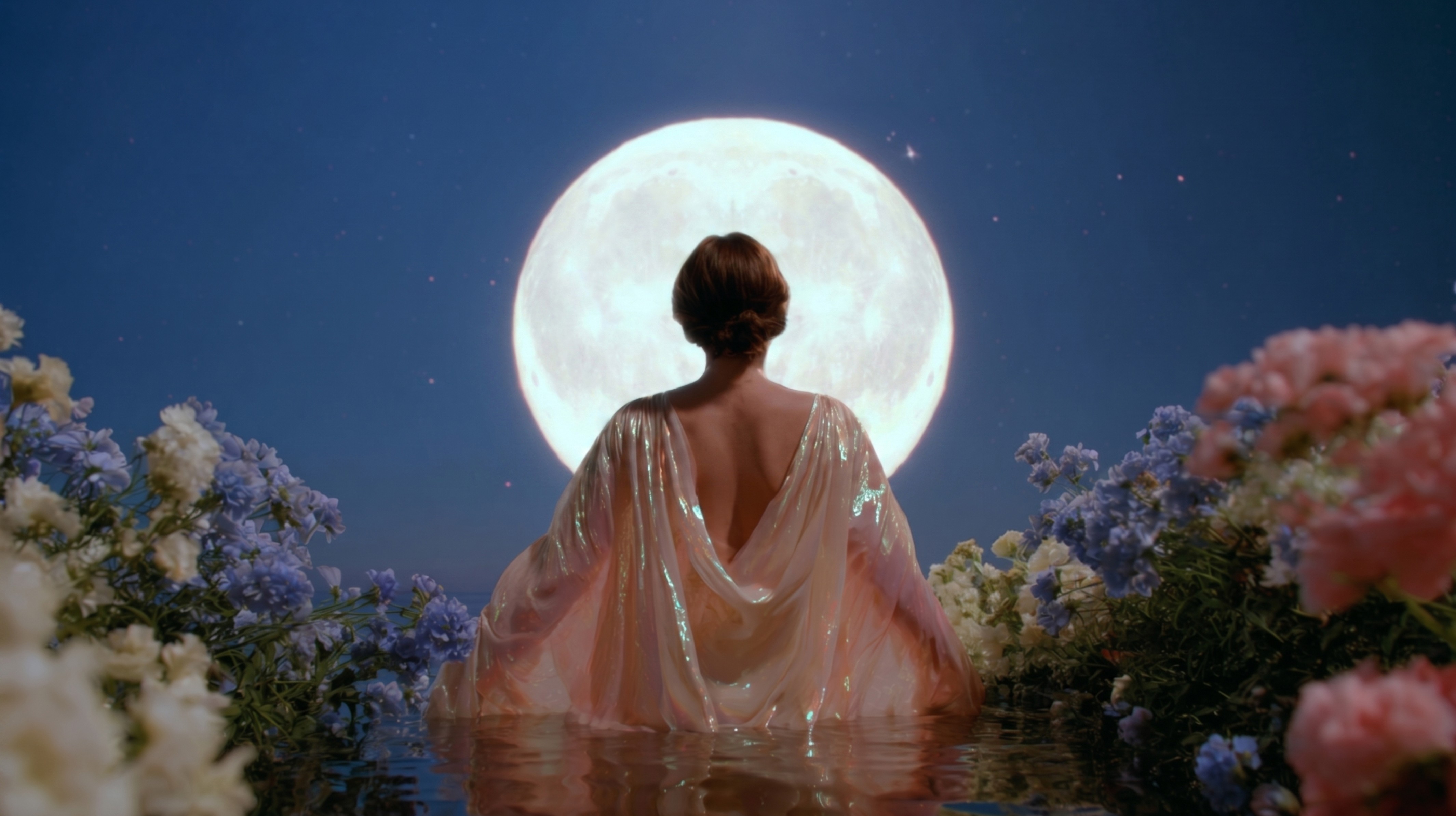
Your Element: stop working against your own nature
Some things we have always sensed, but never had words for. A person gets drained by noise. They are drawn to water, to silence. They cannot work surrounded by people — but alone, they go to depths others simply do not reach. And they think: something must be wrong with me. Nothing is wrong. That is just their element.
What the Elements are — and why it matters
In both Eastern and Western astrology, the zodiac signs are divided into four elements: water, fire, earth, and air. Each element represents a different kind of energy — one that shapes how people think, recharge, make decisions, and move through life.
Water is intuition, depth, sensitivity. People of water can read a room, sense what everyone is feeling, and notice what has not yet been said. Silence is not a luxury for them. It is a necessity.
Fire is impulse, warmth, and the ability to ignite. These people move fast, live in the moment, and energize everything around them. Stillness is not always rest for them. Sometimes, it feels like restriction.
Earth is structure, practicality, and follow-through. When something needs to be built, held together, or brought to completion, this is their territory.
Air is ideas, communication, and mental agility. Air people think laterally, make complicated things feel simple, and wither anywhere things feel static or closed off.
In a Birth Chart, everyone carries their own balance. One or two elements may dominate. One or two may be barely present. That is not a flaw. It is a starting point.

Two principles that change everything
When working with elements in astrology, there are two key ideas.
The first: nourish what is already there.
When we are in the environment of our element, we fill up — quietly, almost without trying. Water people often thrive near rivers, oceans, lakes, rain, or silence. Fire restores itself through movement, sunlight, dance, warmth, and action. Earth returns through walks, physical work, gardening, cooking, and contact with nature. Air comes alive through conversation, travel, learning, and new ideas.
In Eastern astrology and Ayurveda, natural anchors are often used for this: minerals, herbs, places, oils, colors, and rituals. Moonstone, for example, is traditionally linked with the water element — a symbol for tuning into intuition and inner flow.
The second: restore what is missing.
A deficit in any element is not a flaw. It is an invitation for inner work.
Someone with strong water and weak fire may feel deeply, but struggle with quick decisions, visibility, or speaking up confidently. One traditional way to gently bring in more fire is amber — resin from coniferous trees, fossilized over millions of years. Concentrated time and solar warmth. In Ayurvedic tradition, it is often associated with warming, enlivening energy.
Ayurveda as a whole is built on a similar logic: the three doshas — Vata, Pitta, and Kapha — describe different combinations of elemental qualities. Vata is connected with air and movement. Pitta with fire and transformation. Kapha with earth, water, stability, and nourishment. Herbs, oils, foods, and practices are then chosen according to what a specific person may need more or less of at a given moment.
" height="50px" id="mGSlyiJxm" width="50px"/><path d="M 0.418 0.064 C 0.153 0.334 0 0.755 0 1.299 L 0 20.73 C 0 21.275 0.153 21.696 0.418 21.966 L 0.483 22.025 L 11.651 11.141 L 11.651 10.884 L 0.483 0 Z" fill="rgb(20, 23, 34)" height="22.025399999999994px" id="jBw05nm4X" transform="translate(14.377 13.991)" width="11.65100000000001px"/><path d="M 3.718 7.517 L 0 3.887 L 0 3.63 L 3.723 0 L 3.806 0.047 L 8.215 2.493 C 9.474 3.187 9.474 4.329 8.215 5.028 L 3.806 7.47 Z" fill="rgb(20, 23, 34)" height="7.5168px" id="zBGqNLjFF" transform="translate(27.381 21.245)" width="9.15894999999999px"/><path d="M 15.04 3.711 L 11.233 0 L 0 10.953 C 0.418 11.382 1.099 11.433 1.874 11.005 Z" fill="rgb(20, 23, 34)" height="11.30166253361692px" id="KdKUQpjRU" transform="translate(15.471 25.679)" width="15.039500000000004px"/><path d="M 15.04 7.587 L 1.874 0.293 C 1.099 -0.131 0.418 -0.079 0 0.349 L 11.233 11.298 Z" fill="rgb(20, 23, 34)" height="11.297845571876222px" id="uo98QFET1" transform="translate(15.471 13.03)" width="15.039500000000004px"/></g></svg>)
" height="50px" id="wWHPSTFKj" width="50px"/><path d="M 18.336 7.644 C 18.305 4.321 21.127 2.704 21.256 2.629 C 19.658 0.357 17.181 0.046 16.31 0.022 C 14.23 -0.192 12.212 1.235 11.152 1.235 C 10.071 1.235 8.439 0.042 6.68 0.077 C 4.417 0.111 2.299 1.389 1.138 3.373 C -1.258 7.419 0.529 13.364 2.825 16.633 C 3.974 18.235 5.316 20.023 7.073 19.96 C 8.791 19.891 9.433 18.892 11.507 18.892 C 13.562 18.892 14.165 19.96 15.957 19.92 C 17.801 19.891 18.963 18.311 20.071 16.695 C 21.399 14.86 21.932 13.052 21.953 12.959 C 21.909 12.945 18.37 11.628 18.336 7.644 Z" fill="rgb(20, 23, 34)" height="19.961782934563374px" id="QkW07q_la" transform="translate(14.348 15.632)" width="21.952717572460607px"/><path d="M 4.042 4.217 C 4.966 3.089 5.599 1.556 5.423 0 C 4.085 0.058 2.412 0.902 1.449 2.005 C 0.596 2.976 -0.165 4.568 0.031 6.066 C 1.534 6.175 3.077 5.326 4.042 4.217 Z" fill="rgb(20, 23, 34)" height="6.075046314901501px" id="DAsGEchhR" transform="translate(25.257 9.286)" width="5.452511438717515px"/></g></svg>)
What this looks like in real life
Too much air can feel like racing thoughts, difficulty slowing down, background anxiety, or the sense that life is happening mostly in the mind. Grounding may help: slow movement, physical work, meditation, stillness, warm food, fewer tabs open at once.
Too much fire can bring drive and brightness, but also impatience, irritability, and the feeling of running hot. Cooling helps: water, pauses, softer light, a slower pace, practices that do not turn everything into a challenge.
Too much earth brings reliability and steadiness, but creativity and spontaneity may take effort. Dance, movement, travel, playful rituals, and anything that breaks the routine can bring more flow.
Too much water means you feel deeply, sometimes before you can explain why. But ideas and emotions may stay inside and never find their way into form. Structure helps: concrete steps, a plan, grounding practices, rituals, and gentle boundaries around what you absorb.
None of this is about fixing yourself. It is about learning your own language.
Where to find your Balance
In the Moonly app, you can build your Birth Chart and explore a dedicated Elements section. You will see which elements are most expressed in you — water, fire, earth, or air — and begin to notice how they show up in your daily life.
For a deeper reading, working with an astrologer can help you understand not only your dominant element, but also what may need nourishment, balance, or expression. But even a quick look at your Birth Chart often brings that moment of recognition: so that is why I am like this.
Knowing your element is not about labels. It is self-discovery you can actually feel. When you understand which energy dominates in you, you stop fighting your nature and start using it as a foundation for manifestation, self-care, and growth.
Which element feels most like you — and does it match your Birth Chart?